Disclaimer: The information provided in this article is for informational and educational purposes only and does not constitute financial, investment, or trading advice. Always conduct your own research before making any investment decisions.
The strategic deployment of RLUSD and RWA Tokenization serves as the primary catalyst for Ripple’s enterprise expansion moving through 2026. For years, retail and institutional investors primarily viewed Ripple (XRP) as a high-speed, low-cost asset for cross-border remittances. However, as the global cryptocurrency market has matured and international regulatory clarity has improved, Ripple is rapidly expanding into a central infrastructure layer for global digital finance.
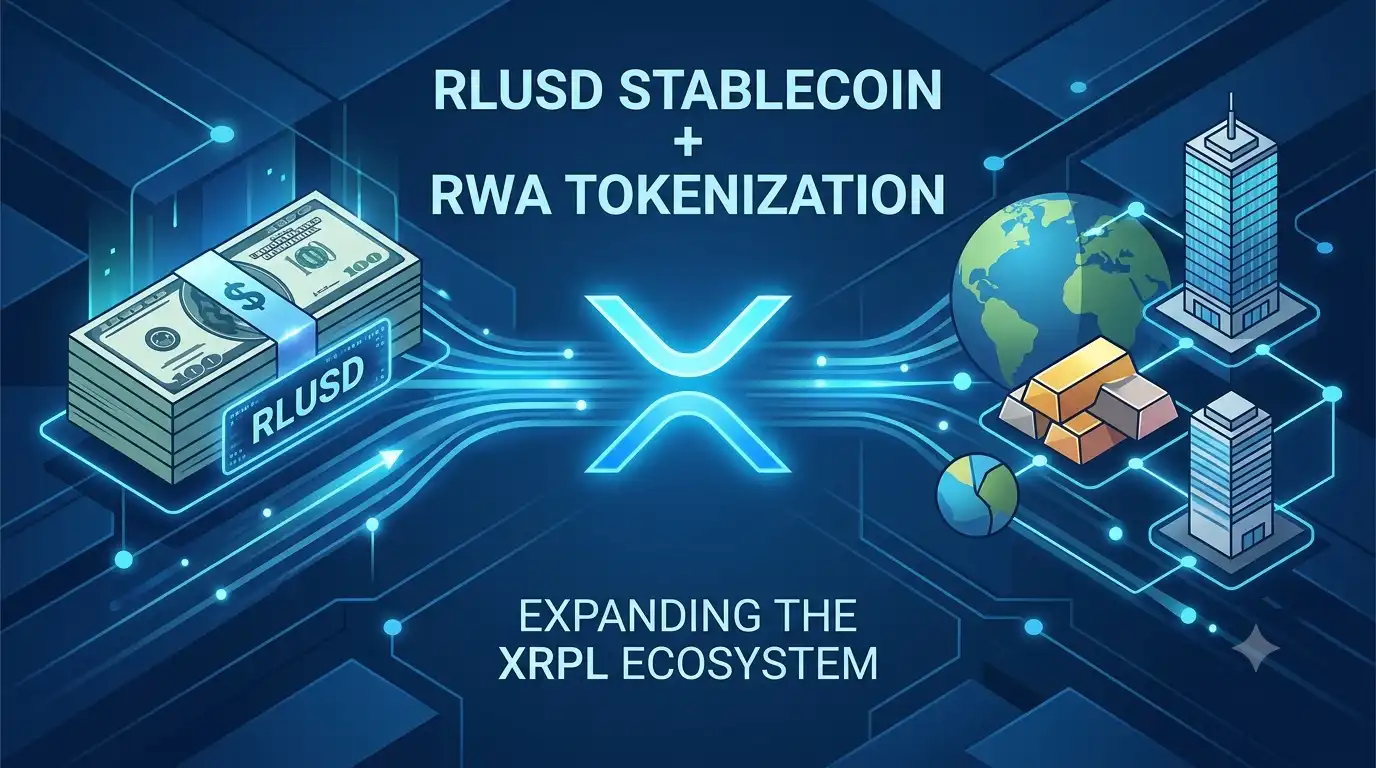
Driving this institutional transformation are two primary growth engines: Ripple’s enterprise-grade stablecoin (RLUSD) and Real-World Asset (RWA) tokenization technology deployed directly on the XRP Ledger (XRPL). In this comprehensive article, we examine how the synergy between RLUSD and RWA Tokenization contributes to the long-term utility, transaction volume, and overall liquidity depth of the XRPL ecosystem.

1. The Strategic Impact of Ripple’s Stablecoin (RLUSD)
To cater to growing institutional demand for stable digital assets, Ripple introduced RLUSD (Ripple USD) — an institutional-grade stablecoin pegged 1:1 to the US dollar and fully backed by short-term US treasuries, dollar deposits, and cash equivalents.
Why Institutional Demand Required RLUSD
Traditional financial institutions, multinational banks, and corporate treasuries require stable, predictable settlement assets to avoid the intraday price volatility inherent in standard cryptocurrencies. Built with strict regulatory compliance, third-party attestations, and transparent audit standards, RLUSD significantly lowers the barrier to entry for global enterprise adoption on public blockchains.
XRP and RLUSD: A Complementary Synergy
Rather than diluting XRP’s core utility, RLUSD works in direct tandem with XRP to create a comprehensive multi-asset liquidity network:
- RLUSD: Serves as a stable store of value and reliable medium of exchange for enterprise payments, treasury management operations, and decentralized finance (DeFi) collateral.
- XRP: Continues to function as the ultimate neutral, high-speed bridge asset for cross-currency liquidity settlement between different fiat currencies, central bank digital currencies (CBDCs), and tokenized assets.
2. RLUSD and RWA Tokenization: Technical Advantages of XRPL
The integration of RLUSD and RWA Tokenization — bringing traditional financial instruments such as treasury bonds, private equity, real estate, and physical commodities onto the blockchain — represents a multi-trillion-dollar institutional opportunity for digital ledgers.
Understanding RWA Tokenization
Real-World Asset tokenization fractionalizes high-value physical or financial assets into digital tokens hosted on a public ledger. Through RLUSD and RWA Tokenization, financial markets unlock global secondary market liquidity, dramatically reduce settlement cycles from days to seconds, and enable continuous 24/7 trading paired with fully transparent on-chain auditing.
XRPL’s Institutional Features: Multi-Purpose Tokens (MPT)
The XRP Ledger features specialized native tokenization protocols, including the Multi-Purpose Token (MPT) standard, specifically architected for enterprise needs and strict financial compliance:
- Built-in Compliance Controls: Incorporates Know-Your-Customer (KYC) and Anti-Money Laundering (AML) controls directly at the ledger protocol level, allowing asset issuers to manage allowlists, freeze assets, and enforce regulatory policies smoothly.
- Predictable Gas Fees: Offers minimal, highly predictable transaction fees alongside high throughput capacity, preventing network congestion and fee spikes during periods of elevated market volatility.
3. Expanding the “Internet of Value” Strategy
Ripple is actively executing its core strategic vision — creating an integrated, frictionless system that seamlessly connects legacy finance with modern decentralized architecture through three distinct operational layers:
- RLUSD Layer: A regulatory-compliant, stable unit of account designed for corporate cross-border transactions and commercial payment rails.
- RWA Tokenization Layer: On-chain liquidity and fractional ownership management for traditional real-world assets like bonds, debt instruments, and commodities.
- XRP Native Layer: The foundational, highly efficient bridge asset driving global, cross-ledger liquidity and instant order book matching.
As global financial institutions systematically increase their capital allocation into tokenized real-world assets and public blockchain ledgers, the XRPL is positioned as a primary settlement layer for global enterprise finance, further reinforcing the long-term necessity of XRP in digital market infrastructure.
4. Long-Term Utility and Market Positioning for 2026
The convergence of regulated stablecoin rails and real-world asset issuance establishes a powerful feedback loop for the XRP Ledger. By offering traditional financial institutions compliant entry points through RLUSD and RWA Tokenization, enterprise users gain immediate, low-friction access to the broader capabilities of the ledger.
As transaction volumes from tokenized bond settlement and trade finance expand, the underlying network effects enhance order book depth on the native Decentralized Exchange (DEX). This growing utility shifts the market valuation model of the ecosystem away from speculative sentiment and toward sustainable, utility-driven adoption metrics.
To see how institutional clarity and ETFs impact the broader token ecosystem, feel free to check out our previous analysis on the Ripple XRP Outlook for 2026.
💡 Conclusion & Ecosystem Outlook
The powerful combination of RLUSD and RWA Tokenization marks a transformative era for the Ripple ecosystem. By pairing an audited, compliant stablecoin with advanced enterprise tokenization standards, Ripple is creating an indispensable bridge between traditional Wall Street finance and decentralized asset settlement moving through 2026.