Disclaimer: The information provided in this article is for informational and educational purposes only and does not constitute financial, investment, or trading advice. Always conduct your own research before making any investment decisions.
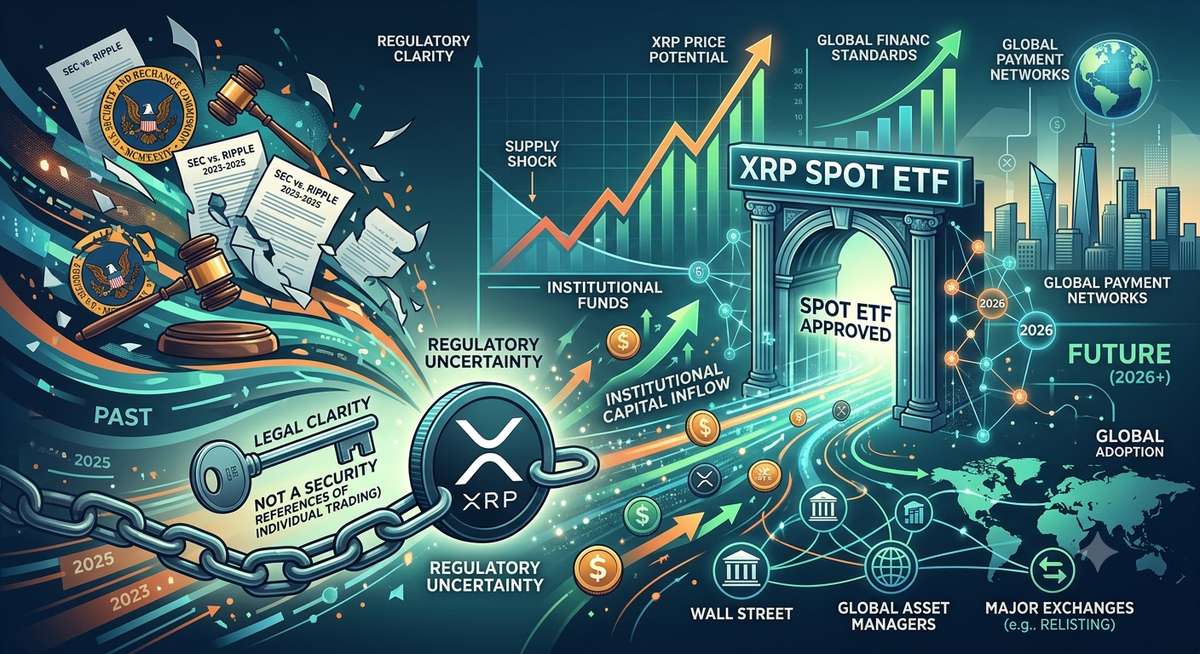
The overall Ripple XRP Outlook for 2026 has transformed dramatically as regulatory risks fade and institutional access expands across global digital asset markets. For years, Ripple (XRP) has been widely recognized across the cryptocurrency industry for its high-speed settlement capabilities, ultra-low transaction costs, and real-world utility in cross-border payments. However, despite these technological advantages, the asset was long overshadowed by severe legal uncertainty surrounding its prolonged lawsuit with the U.S. Securities and Exchange Commission (SEC). This ongoing legal dispute stifled institutional adoption in North America and created hesitation among global enterprise partners.
With clear regulatory standing now officially established, the institutional valuation framework for XRP has fundamentally shifted. As digital asset integration deepens across traditional banking infrastructure, the combination of legal certainty and institutional investment channels marks a new era for the XRP Ledger (XRPL) ecosystem. In this comprehensive analysis, we examine how the resolution of the SEC legal battle, the expansion of regulated Spot XRP ETFs, and direct institutional capital inflows shape Ripple’s long-term utility, liquidity depth, and strategic market position moving into 2026.

1. Resolution of the SEC Case: Achieving Regulatory Clarity
The formal conclusion of Ripple’s long-standing legal dispute provided a critical regulatory precedent not only for the XRPL ecosystem, but also for digital asset markets worldwide. The legal resolution directly improved the macro Ripple XRP Outlook by removing ambiguity over whether secondary market token sales constitute investment contracts under the Howey Test.
Key Takeaways from the Legal Precedent
- Non-Security Classification: The court established that standard XRP transactions executed on public cryptocurrency exchanges do not constitute securities contracts. This ruling created a definitive legal boundary for retail trading, giving exchanges the regulatory confidence needed to support XRP pairs without fear of enforcement actions.
- Institutional Re-engagement: With the legal overhang permanently removed, digital asset exchanges globally re-listed XRP. More importantly, Tier-1 financial institutions and payment service providers resumed onboarding discussions, significantly accelerating institutional integration and enterprise cross-border partnerships that had previously been paused.
- Global Regulatory Alignment: The resolution aligned U.S. regulatory treatment with major international jurisdictions such as Japan, the UK, and the UAE, where XRP had already been recognized as a compliant payment token. This legal harmonization laid the groundwork for seamless cross-border financial corridors.
2. Spot XRP ETFs: Unlocking Regulated Institutional Inflows
Following the regulatory approval of spot ETP frameworks for digital commodities, approved Spot XRP ETFs have emerged as a primary gateway for Wall Street capital and traditional asset managers seeking compliant crypto exposure. This development fundamentally brightens the institutional Ripple XRP Outlook across major financial markets.
1) Participation by Global Asset Managers
Major institutional fund managers have introduced dedicated spot XRP investment vehicles to their product suites. These funds allow traditional brokerage accounts, family offices, and wealth management firms direct access to XRP price exposure without requiring them to navigate complex cryptocurrency exchanges or specialized custodians.
2) Direct Capital Allocation from Pension Funds
Through spot ETFs, large institutional investors, public pension funds, and multi-asset wealth funds can seamlessly deploy capital into XRP. The ETF wrapper satisfies strict internal compliance, risk management, and fiduciary mandates, eliminating operational risks associated with managing self-custodial private keys or cold storage setups.
3) Market Liquidity Dynamics & Custody Lockups
Sustained institutional capital inflows into spot ETF products require ETF issuers to purchase and hold underlying XRP in regulated custody vaults. As growing sums of XRP are absorbed into long-term institutional custody, the circulating supply on public order books contracts significantly, fundamentally altering market supply-demand dynamics and market depth.
3. Establishing a Global Financial Standard & Institutional Adoption
With legal uncertainty resolved and institutional infrastructure fully active, Ripple (XRP) has completed its transition from a speculative altcoin into a regulated, institutionally backed liquidity asset for global finance.
- Divided Capital Allocation Strategy: Institutional market participants are adopting a dual-track strategy. They utilize regulated spot ETFs for corporate balance sheet exposure and portfolio diversification, while deploying native self-custodial wallets (such as Xaman or enterprise cold storage) for active protocol interaction, liquidity provision, and cross-border settlement testing.
- Enterprise Ecosystem Expansion: By combining established cross-border banking networks, Ripple’s enterprise stablecoin (RLUSD) settlement infrastructure, and deep spot ETP liquidity, the XRP Ledger is cementing its position as a foundational layer for tokenized real-world assets (RWA) and institutional digital finance.
- Interoperability with Central Bank Frameworks: As central banks globally research Central Bank Digital Currencies (CBDCs) and tokenized deposit networks, the XRPL’s high throughput and native DEX capability offer an attractive bridge asset framework for cross-currency settlement.
4. Long-Term Market Valuation & Ripple XRP Outlook for 2026
The structural transformation of XRP’s market environment carries significant implications for its valuation model moving through 2026. Historically driven primarily by retail momentum and news-based trading cycles, XRP’s price discovery mechanism is increasingly anchored in measurable network metrics and institutional supply sinks.
The combination of predictable escrow releases, programmatic burning of transaction fees on the XRPL, and institutional ETF accumulation creates a structural framework that favors liquidity stability over extreme volatility. As cross-border payment volume routed through RippleNet and the XRP Ledger continues to scale globally, real-world utility is replacing speculative trading as the primary driver of token velocity and value retention.
For more detailed cryptocurrency analyses and macro market guides, feel free to explore our latest crypto market insights.
💡 Conclusion & Macro Outlook
The long-term Ripple XRP Outlook for 2026 remains exceptionally robust. The elimination of SEC regulatory risks, combined with active Spot XRP ETF allocation channels and expanding enterprise utilization, positions XRP as an indispensable settlement asset within modern international finance. Investors and market observers should monitor institutional ETF flow metrics and enterprise XRPL adoption as key indicators for long-term valuation trends.