Disclaimer: The information provided in this article is for informational and educational purposes only and does not constitute financial, investment, or trading advice. Always conduct your own research before making any investment decisions.
Navigating this comprehensive XRPL Ecosystem Guide is essential for anyone looking to maximize their utility on the XRP Ledger today. Ripple (XRP) is no longer just a digital asset for fast, low-cost cross-border payments. Today, the XRP Ledger (XRPL) ecosystem is expanding rapidly across multiple infrastructure layers — including smart contracts, DeFi protocols, and sidechains.
In this detailed guide, we will explore the key projects driving the XRPL ecosystem forward and walk through essential practices for safely storing your XRP without exposing your digital assets to online security threats.

1. Key Projects Leading the XRPL Ecosystem Guide
The Ripple ecosystem continues to evolve through strategic integrations aimed at maximizing the utility of XRP and expanding its on-chain capabilities across decentralized finance and smart contract integration.
1) Flare Network
Flare Network introduces advanced smart contract functionality to the XRPL, paving the way for sophisticated decentralized finance (DeFi) applications on the network. Additionally, it acts as a secure decentralized oracle, delivering real-world external data reliably onto the blockchain.
2) Xaman Wallet (formerly Xumm)
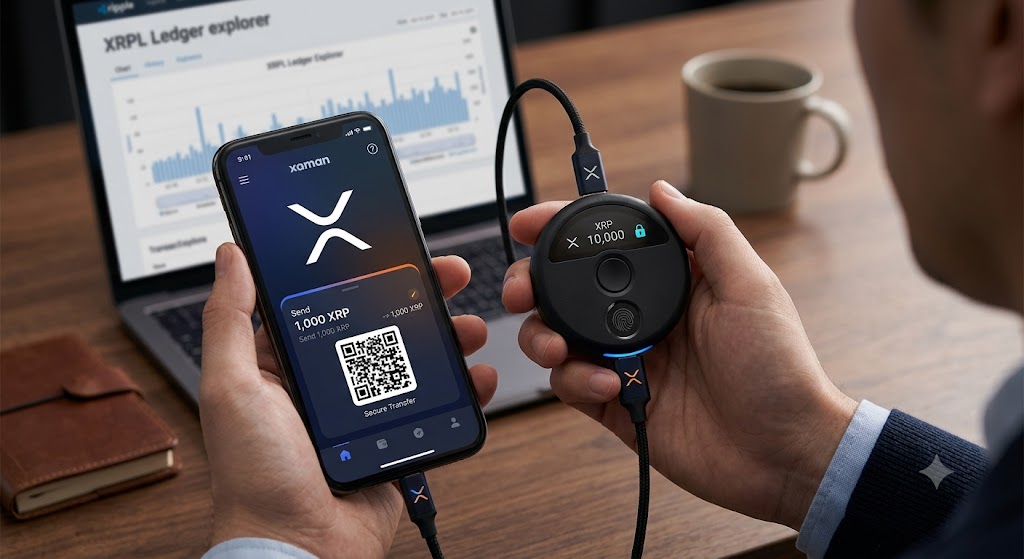
Xaman is the premier software (hot) wallet built specifically for the XRP Ledger community. It provides seamless interaction with XRPL-based dApps, decentralized exchanges (DEXs), token airdrops, and NFT trading, serving as an essential access point in any XRPL Ecosystem Guide.
3) EVM Sidechain
Featuring full compatibility with the Ethereum Virtual Machine (EVM), the EVM Sidechain allows Ethereum developers and dApps to seamlessly bridge their smart contracts straight into the XRPL environment, multiplying cross-chain interoperability.
2. Wallet Storage Guide for Safe Asset Management
Whether you plan to hold XRP for long-term investment or actively participate in decentralized applications, choosing the right wallet type is crucial for protecting your digital wealth.
| Wallet Type | Examples | Pros | Cons |
|---|---|---|---|
| Hot Wallet (Active Use) | Xaman, Exchange Wallets | Fast transaction execution, high convenience, direct dApp integration. | Online connection increases vulnerability to phishing and malware. |
| Cold Wallet (Long-Term) | D’CENT, Ledger | Keys secured inside offline hardware; online hacking is virtually impossible. | Incurs hardware costs; requires physical connection for trades. |
3. Essential Wallet Storage Tips for XRP Investors
Maintaining security while interacting with on-chain protocols requires a balanced, multi-tier storage setup:
- Divide Your Assets Strategy: Keep small operational amounts for active trading or dApp utility in a convenient hot wallet (Xaman), while storing the vast majority of your holdings in an offline cold wallet (D’CENT/Ledger).
- Protect Your Recovery Phrase: When generating a hardware wallet, never record your 24-word seed phrase digitally (e.g., photos, cloud notes, or email). Always write it down on physical paper or stamp it onto metal plates and store it in a secure location.
- Verify Transaction Details: Always confirm the recipient address and required Destination Tags whenever transferring tokens between hot wallets and centralized exchanges.
4. Frequently Asked Questions (XRPL Ecosystem Guide)
Q1: Is Xaman wallet safe for storing large amounts of XRP?
While Xaman is a highly secure, self-custodial software wallet, any device connected to the internet carries potential risks from mobile malware or phishing. For large long-term holdings, a hardware cold wallet is recommended.
Q2: Why is smart contract capability important for the XRPL ecosystem?
Smart contracts allow automated financial operations like lending, borrowing, and automated market making (AMM). Integrations like Flare and the EVM Sidechain bring these capabilities to XRP holders without sacrificing the XRPL’s high speed and low costs.
To dive deeper into self-custody practices, check out our XRP Wallet Security Guide, or read our Ripple XRP Outlook for 2026 for macro analysis.